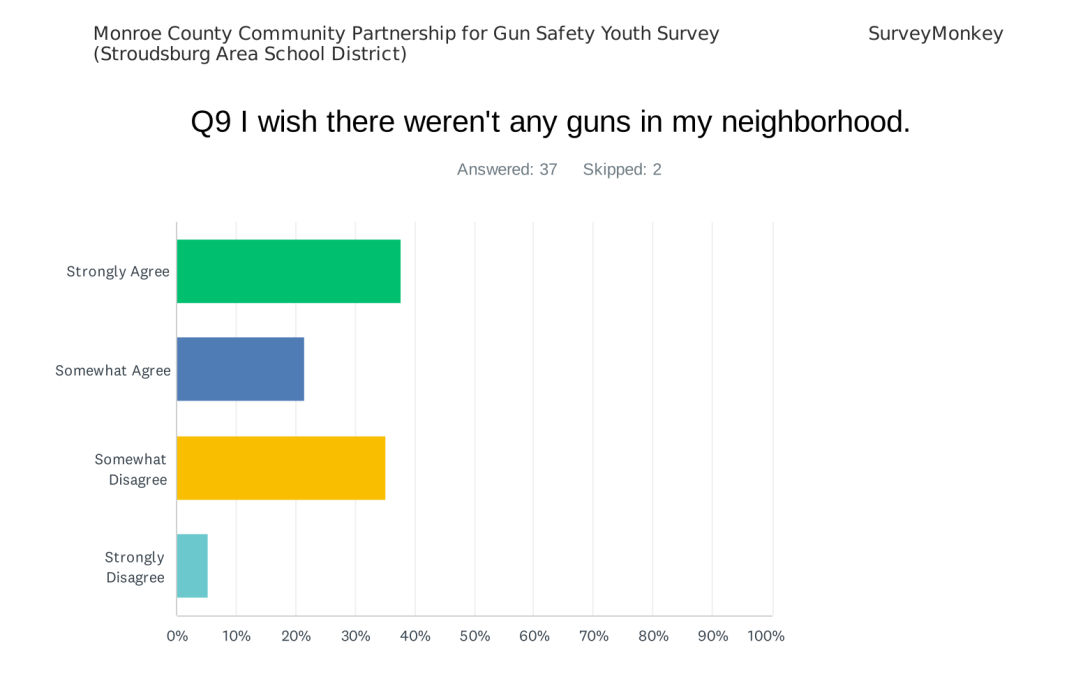
State-funded survey of high school students collected sensitive data on gun access and mental health, but agencies report no records detailing how that data was stored, shared, or protected.
Apparent absence of accountability spans state and county offices - leaving no clear trail for basic safeguards expected when public dollars fund survey data collection involving children.
A state-funded high school student survey conducted in Monroe County surfaced an unusual and troubling gap in governmental accountability to the public: the state funded survey is now drawing scrutiny after the Pennsylvania Commission on Crime and Delinquency (PCCD) reported it has no records documenting data management procedures, including sharing information with a third party vendor and researcher.
Reason we may be concerned: Collection of sensitive data from minors under a violence prevention initiative, with multiple government agencies state they have no records (i.e. written policies and documents) regarding student survey collection, analysis, storage, sharing, security, nor plans for deletion.
The school survey is just one action taken as part of a violence prevention initiative with the PCCD as the administering agency for the Violence Intervention and Prevention (VIP) grant that funded the project (FY 2023–24 VIP subgrant #43968) totaling $695,286 was awarded to Monroe County over a three-year period. As the grant administrator, PCCD typically holds oversight, compliance monitoring, and auditing responsibilities for funded initiatives.
The student survey in question is formally titled: Youth Community Needs Assessment Survey, was administered by the newly established Community Partnership for Gun Safety with involvement of a third-party vendors, the Carey Group, LLC and a Rutgers University researcher.
What the Student Survey Included:
- Exposure to gun violence in the home or community
Ex. item # 8. “People would look up to me if I had a gun.” - Perceptions of firearm accessibility
Ex. item # 20. “How easy would it be for you to get, if you wanted, a handgun?” - Emotional and mental health indicators
Ex. item # 21. Asks refers to student’s ‘bothered’ by each of the following symptoms ‘ within the last two weeks. ‘Symptoms’ listed as “feeling down, depressed, irritable or hopeless.”
These categories of information are generally considered sensitive when collected from minors and typically require clearly defined safeguards, parental transparency protocols, and strict data governance procedures.
Specifically this survey was given to high school students during school time, on school devices then that information seemingly sent to an outside business — including third-party organization and academic collaborators —the governmental agencies have not produced contracts or records outlining responsibilities for student data protection.
Missing Records, or a Missing System?
Therefore to question data and security management methods Right-To-Know requests were sent to the Monroe County (MC) Commissioners Office, MC District Attorney’s Office and the PCCD – all stated there are NO records of the student data practices for the Community Partnership for Gun Safety survey. February 23, 2026 the PCCD denied the request stating it is ‘not in possession nor control of records’ related to data handling practices of the survey in question. Currently this writer has an ongoing appeal through the PA Open Records Docket AP 2026-0922, for the survey “collection, analysis, interpretation and deletion.”
Records not produced or not located
- ∙ Data storage policies for student survey responses. Where and how is data stored? ∙ Data security and encryption standards. Security measures to protect student privacy?
- ∙ Third-party vendor agreements or contracts. Besides an overall written business contract - what and where are the survey data policies, sharing agreements, and security measures?
- ∙ Retention or deletion schedules for student data. Is survey data ever deleted? ∙ Documentation of analytical methodology. Third party vendors analyzing data using unbiased methods?
At its core, the situation presents a stark dilemma
- If the records exist, they have not been produced.
- If they do not exist, then basic safeguards around sensitive student data may not have been formally documented.
Either outcome raises significant questions about oversight, transparency, and accountability in publicly funded programs involving minors.
Broader Accountability Concerns
The absence of records raises broader questions about how publicly funded research involving minors is structured and monitored.
It also remains unclear whether student responses were shared beyond the immediate project — including with outside vendors, researchers, or other entities — or whether any formal restrictions governed such sharing.
For parents, educators, and policymakers, the gap is not just procedural. It should be foundational: who is responsible for safeguarding student data when multiple agencies and contractors are involved?
*About the Carey Group, LLC, words taken from their website: “… we understand the promise of the future and the difficulties of the present. Our purpose is to assist criminal and juvenile justice and behavioral health systems in the achievement of their goals by offering professional consulting services, staff training, tools and more.”